FOCUS:
UI / UX
AREA:
ZHDK
YEAR:
2026
Trace
about.
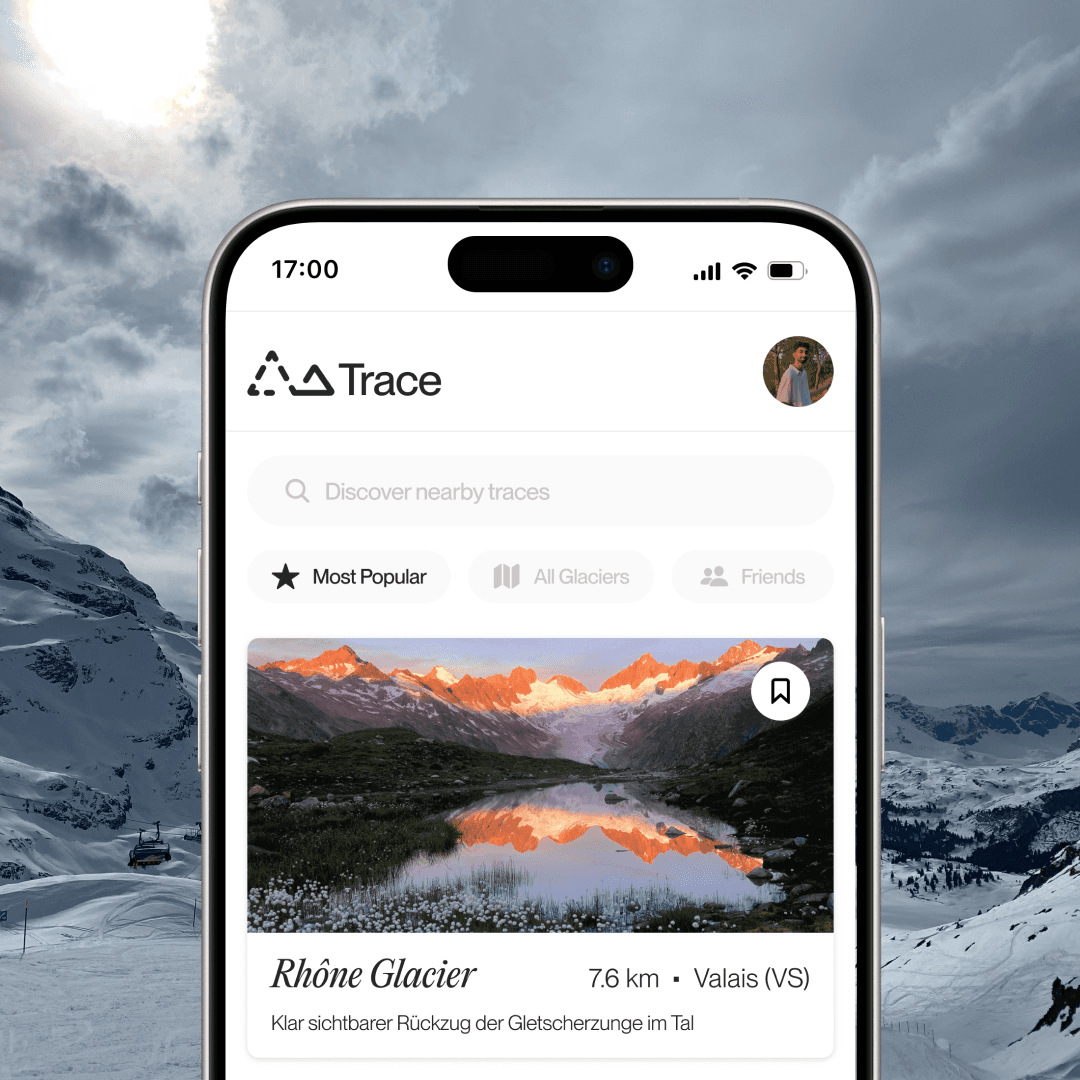
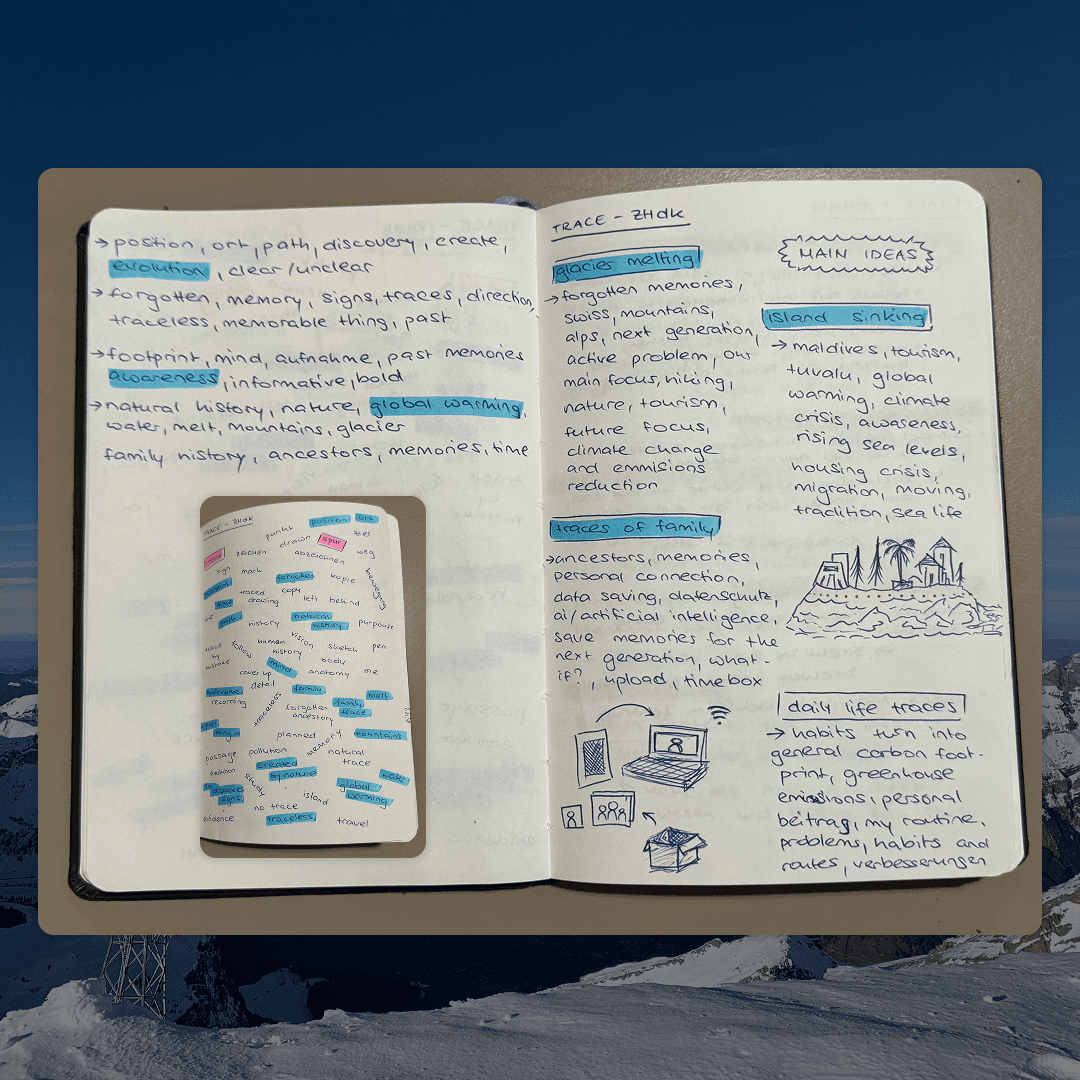
Starting from the theme "Trace", the project explores how climate change can be experienced as a spatial and temporal trace. Even though the topic is not always present in the media, it remains highly relevant and directly affects our everyday lives.
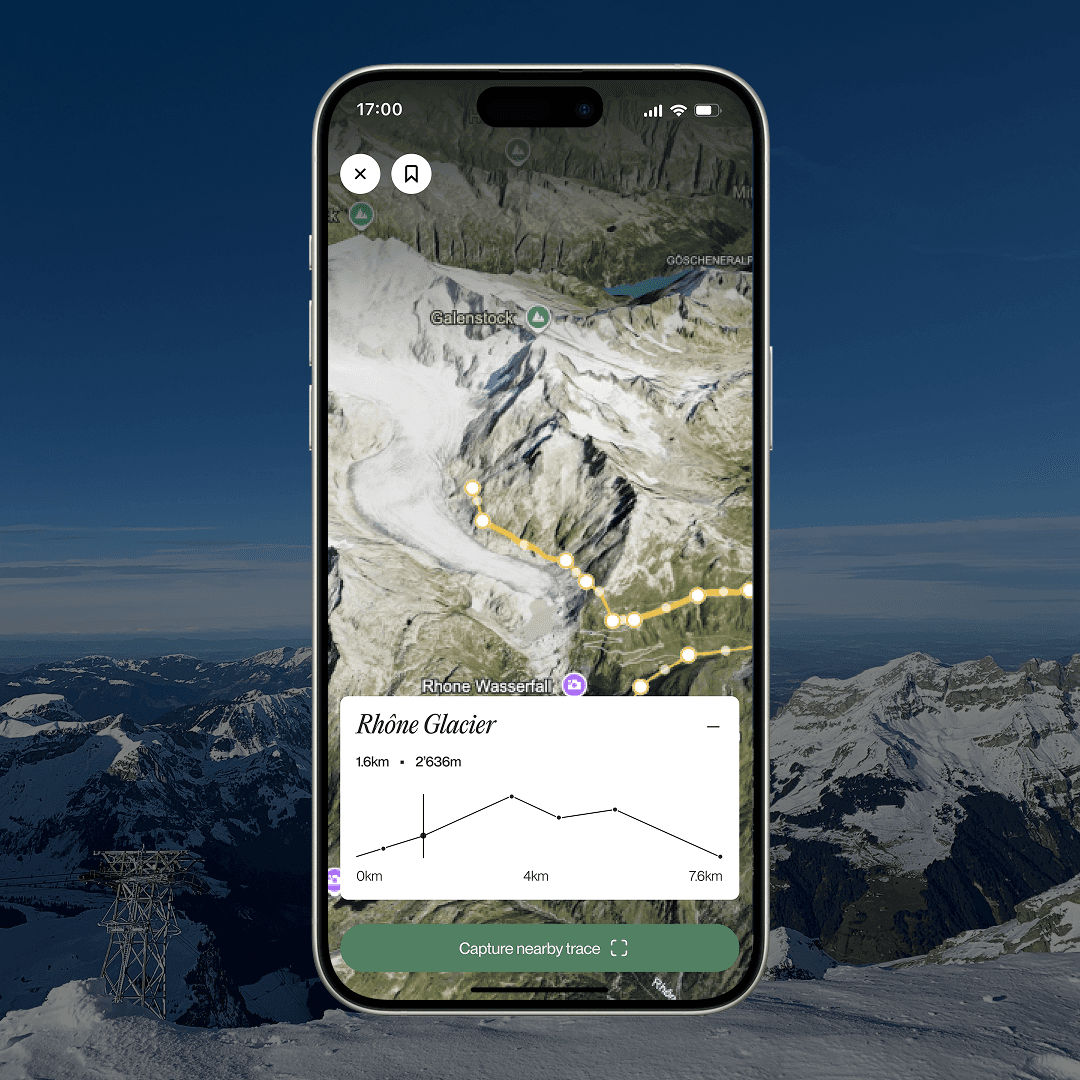
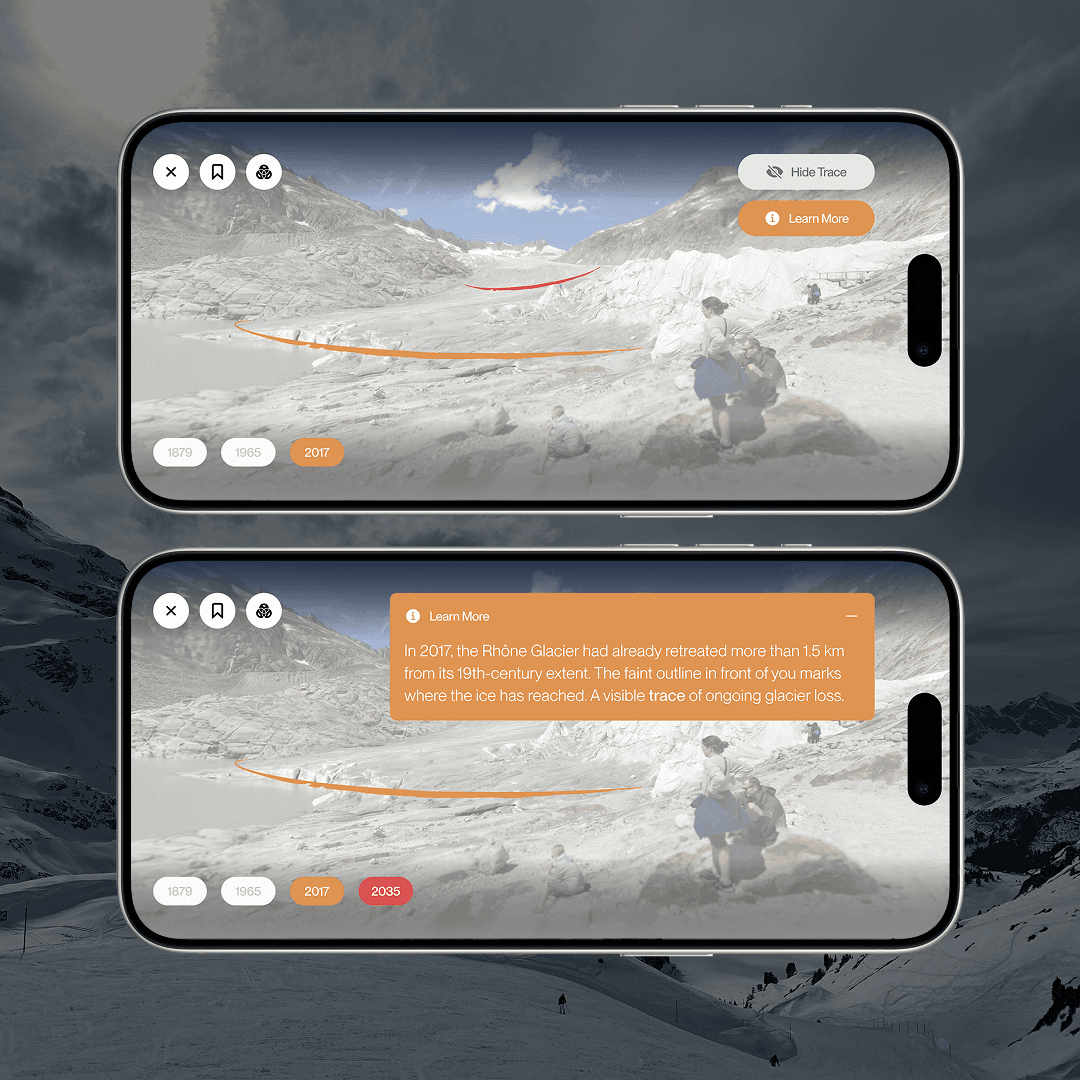
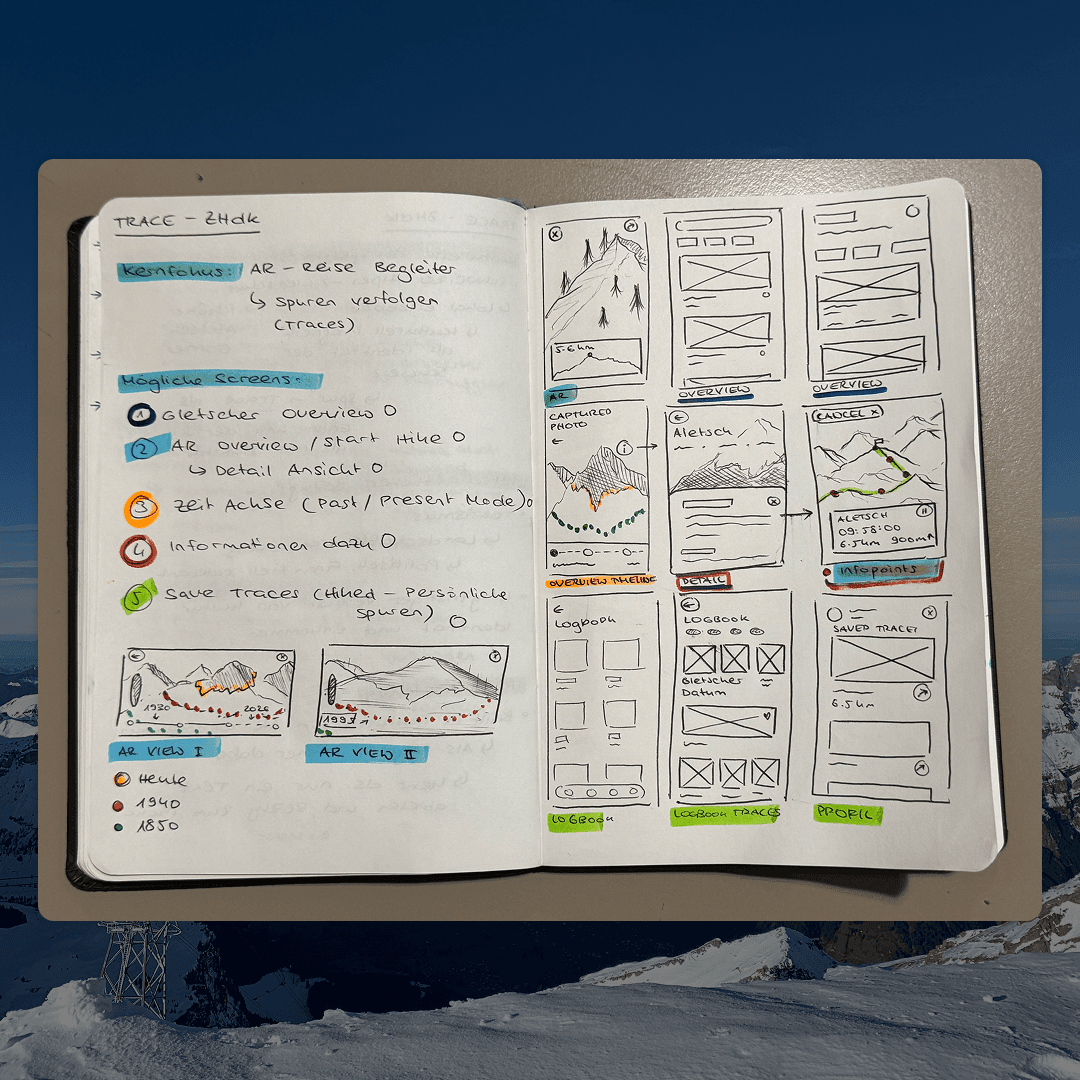
Using augmented reality, historical glacier ranges are projected onto the real landscape. The glaciers are not shown as reconstructed objects, but as transparent outlines. This visual reduction acts as a trace of loss, making absence visible rather than recreating what is gone.
The project is based on the belief that technology and nature do not have to be in conflict. The smartphone is deliberately not treated as a distraction, but as a tool and companion. Trace was designed to create awareness and translate a global change into a personal, local context.
challenge.
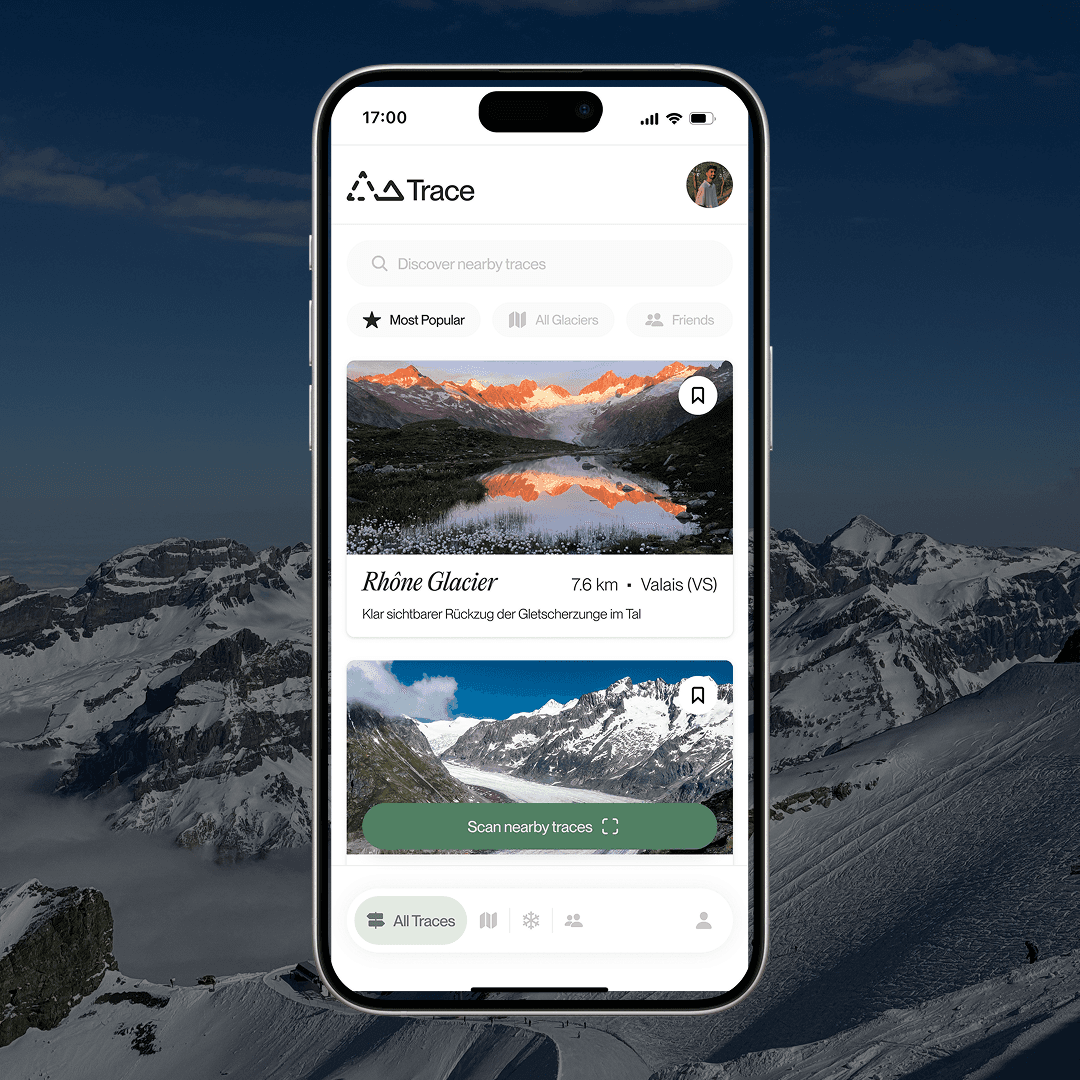
One of the main challenges was to reduce a global issue to a local level. Climate change is not explained in abstract terms, but made visible directly in the users space. The experience is designed to be used on site (for example, while hiking in the alps) and in motion, keeping the user’s physical presence and activity at the center. The app acts as a companion rather than a replacement for the real experience.
The Swiss Alps play a central cultural role in this context. Glaciers are part of Switzerland’s collective memory, landscape, and identity. At the same time, they are closely connected to tourism as an economic factor. Their long-term loss has not only ecological but also financial and political consequences, particularly for regions that depend heavily on alpine tourism.
From a design perspective, another challenge was translating an AR-based idea into a two-dimensional concept, while still keeping the spatial vision and interaction.
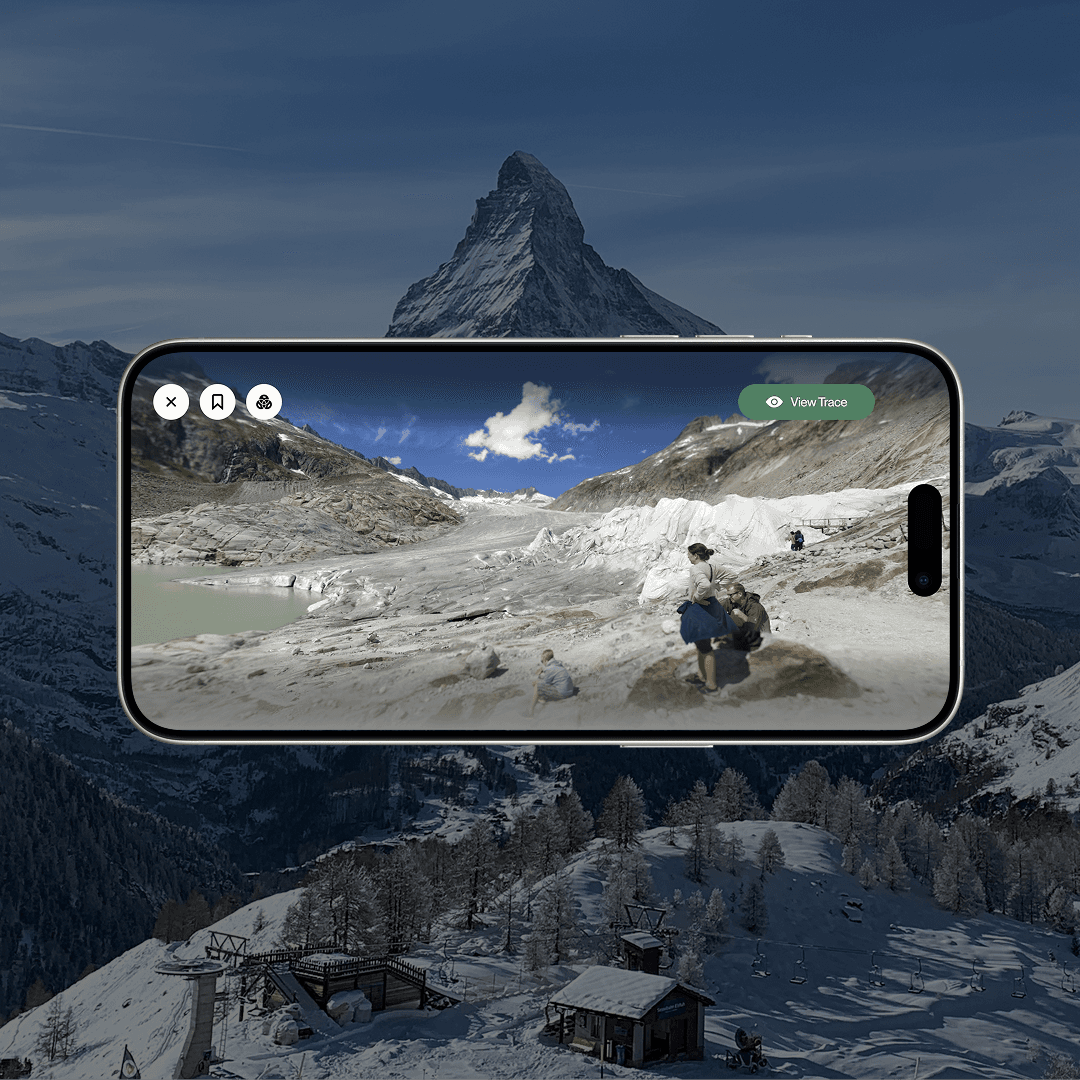
result.
Choosing an app as the medium was clear for me. Mobile devices already offer built-in features such as camera access, location services, motion tracking, and AR frameworks, all of which are essential to the project. These native features make the idea possible within its context of use.
Due to my limited time and resources, the project could not be developed to its full intended depth. Military service in particular allowed only a very restricted time frame, which influenced both the research process and the design execution.
Nevertheless, it was important for me to develop a clear concept and translate it into an understandable design. Working with a complex topic that was initially unfamiliar to me became an additional challenge, but also a learning experience.
Trace is therefore understood as a conceptual prototype that demonstrates how interaction design can help make societal issues spatialy and emotionally felt. There is still room for further development.
testimonial.
An interesting project with a current and relevant topic. The limited time frame was challenging, yet a clear idea was communicated.

Abhivir Wig
Interactive Media Designer